







Worming Your Chickens: A Backyard Chicken Keeper’s Guide (Australia)
If you keep chickens in Australia, worms aren’t a matter of if — they’re a matter of when. Free-ranging chooks peck at soil, insects, and droppings all day, which is exactly how intestinal parasites spread. The good news is that with a sensible worming routine, most backyard flocks stay happy, healthy and productive year-round.
Here’s what every Aussie backyard chicken keeper should know about worming: why it matters, how often to do it, what signs to watch for, and which products are actually registered for use in poultry here.
Why Backyard Chickens Are So Prone to Worms
Free-range poultry are far more exposed to worms than commercially housed birds. Chickens pick up worm eggs directly off contaminated ground, or indirectly by eating insects, slugs, snails and earthworms that are themselves carrying parasite larvae. Because so many common poultry worms use this indirect life cycle — bug eaten by chicken, chicken eaten by worm, so to speak — it’s genuinely difficult to keep a foraging flock 100% worm-free, no matter how clean your coop is.
The parasites you’re most likely to encounter in an Australian backyard flock include:
- Large roundworm (Ascaridia galli)
- Caecal worm (Heterakis gallinae)
- Hairworm/threadworm (Capillaria spp.)
- Tapeworm
- Gapeworm
Most healthy adult birds can carry a small worm burden without obvious problems — a certain low-level exposure is normal and even helps build some natural resistance. It’s when the burden builds up that you start to see real health and production issues.
Signs Your Flock May Need Worming
Worms aren’t always obvious in the early stages, which is exactly why routine worming (rather than waiting for symptoms) is the standard approach. That said, keep an eye out for:
- Pale, watery egg yolks or a noticeable drop in egg production
- Diarrhoea, or droppings that are unusually runny or smelly
- Visible worms or tiny white larvae in droppings
- Weight loss or a bird that feels light despite normal appetite
- Lethargy, pale comb/wattles, or a generally “off” bird
- Reduced appetite or, sometimes, an increased appetite without weight gain
- Gasping, stretching the neck, or head-shaking — classic signs of gapeworm, which lodges in the windpipe
Because these symptoms can just as easily point to poor nutrition, mites, or other illness, the most reliable way to know if your flock actually has a worm problem — and which worms you’re dealing with — is a faecal egg count through your vet. Many keepers get this done two to four times a year, particularly if they want to worm strategically rather than “just in case.”
How Often Should You Worm Chickens in Australia?
There’s no single answer that suits every flock, but a commonly used starting point for backyard keepers is worming every three months (roughly quarterly), especially for free-range birds with regular access to soil and insects. Some keepers with heavily stocked or particularly damp, worm-prone yards worm more frequently; others with drier runs and smaller flocks can stretch this out, especially if faecal testing shows a low burden.
Rather than worming blind on a fixed schedule forever, many vets recommend:
- Getting a faecal egg count done to confirm whether worming is actually needed and what parasites are present.
- Treating according to those results with an appropriate product.
- Re-testing periodically (2–4 times a year) to keep the programme on track.
This “test, then treat” approach avoids unnecessary dosing and helps you catch problems like tapeworm or gapeworm, which not every wormer will treat.
Worming Medicines Used by Australian Backyard Keepers
One important thing to know: very few worming agents are actually registered for use in poultry in Australia. This matters because registered products have known withholding periods (or none at all) for eggs and meat, while off-label use of other dewormers means you’re flying blind on residues.
The two actives most commonly used and registered for backyard chickens are:
Flubendazole (sold as Flubenol)
A benzimidazole wormer, widely used in commercial and backyard poultry. It’s given orally, usually mixed through feed, and is effective against roundworm, tapeworm, gapeworm and even capillaria (hairworm). One of its biggest drawbacks for backyard keepers is also its biggest selling point: no egg withholding period, meaning you can keep eating your eggs throughout treatment.
Levamisole (sold as Kilverm, Nilverm, and similar products)
Also registered for poultry with no egg withholding period. Levamisole-based wormers are typically dosed through the drinking water and are effective against roundworm, caecal worm and hairworm — but not tapeworm, so keepers dealing with tapeworm specifically often reach for a flubendazole-based product instead.
Products combining levamisole with praziquantel (e.g. Avitrol Plus)
These add tapeworm coverage, but because praziquantel isn’t registered for poultry, products containing it require an extended egg withholding period of around 4–6 weeks. Worth factoring in if you rely on your eggs.
Red Hen Dewormer (medicated feed)
A convenient option that’s become popular with Aussie backyard keepers: rather than dosing through water or mixing a powder into feed yourself, Red Hen Dewormer is a complete medicated feed containing 60ppm flubendazole. You simply feed it as your flock’s sole ration for 7 consecutive days (removing all other feed so they eat enough to get the correct dose), then go back to their normal layer feed. It covers the same broad range of worms as other flubendazole products, including tapeworm, and — being flubendazole-based — carries no egg withholding period. It’s a good fit for keepers who find dosing water or mixing medicated feed themselves fiddly, since the chickens simply eat their usual amount of feed as normal.
Worm All (medicated feed)
Another Australian feed-form dewormer built around the same active, flubendazole (Flubenol). Worm All is designed to solve the same problem Red Hen does — some chickens are fussy about the taste of water-based wormers — by presenting the dose in feed instead, again over a 7-day course. It also comes with a high-nutrition additive aimed at supporting gut repair after a worm burden, and like other flubendazole products, has no egg withholding period.
Fluverm and Flubenol (powders/tubs)
If you’d rather mix a wormer into your own feed rather than buy a dedicated complete-feed product, Fluverm(Vetsense, Australian made) and Flubenol (Elanco) are both flubendazole powders sold in scoop-and-mix tubs. You measure out the correct amount and stir it through your regular feed for a 7-day course, rather than swapping to a pre-medicated ration. Functionally they work the same way as Red Hen and Worm All — same active ingredient, same 7-day course, no egg withholding period — the difference is really just format and a bit more control over dosing your own feed mix, versus the convenience of a ready-made feed.
A note on ivermectin and moxidectin
These are sometimes used off-label in poultry (more commonly for external parasites like mites), but a withholding period should be applied, and there’s no good evidence they’re effective against internal worms in chickens. They’re generally not the go-to choice for a worming programme.
Always read and follow the label directions for your chosen product — dose is calculated by bird weight, and steps like withholding water beforehand (so thirsty birds drink the medicated water readily) and disinfecting the coop afterward are part of doing it properly.
Egg Withholding Periods at a Glance
If keeping a steady supply of eggs matters to you (and for most backyard keepers, it does), the active ingredient in your wormer makes a big difference:
| Wormer | Active Ingredient | Egg Withholding Period |
|---|---|---|
| Flubenol | Flubendazole | None |
| Red Hen Dewormer | Flubendazole | None |
| Worm All | Flubendazole | None |
| Fluverm | Flubendazole | None |
| Kilverm / Nilverm | Levamisole | None |
| Avitrol Plus | Levamisole + Praziquantel | Approx. 4–6 weeks |
| Off-label ivermectin/moxidectin | Ivermectin / Moxidectin | Not clearly established — best avoided unless advised by a vet |
The trade-off is fairly simple: flubendazole and straight levamisole products let you keep eating your eggs right through treatment, but levamisole alone won’t touch tapeworm. If tapeworm is confirmed (via a faecal test) and you reach for a praziquantel combo to cover it, be prepared to bin your eggs for over a month. For most backyard flocks without a confirmed tapeworm problem, flubendazole or levamisole are the more convenient everyday choices.
What About Natural Alternatives?
Plenty of Australian backyard keepers lean on natural, everyday routines to support gut health rather than reaching for a chemical wormer every time. A typical approach might look something like this:
- Garlic cloves in the daily water — garlic’s active compound, allicin, has genuine antibacterial and antifungal properties, and there’s some evidence it has antiparasitic activity too, though this hasn’t been shown to reliably clear an established worm burden in chickens.
- Apple cider vinegar (ACV) in the water once a week — mildly acidifies the crop and gut, which may make conditions less hospitable for some parasites and bacteria, and can support general digestive health. The evidence for ACV as a standalone dewormer is thin, though it’s a low-risk, well-tolerated addition most birds do well on.
- Fermented feed with turmeric, chilli powder and oregano, mixed with soaked oats for breakfast — fermenting feed boosts its probiotic content and nutrient availability, which supports overall gut resilience. Turmeric, chilli and oregano all show antimicrobial or anti-inflammatory properties in various studies, and this kind of daily “gut health” feed is a popular routine among keepers wanting a more holistic approach.
- Regularly collecting droppings from the yard — this one deserves a special mention, because unlike the dietary additions above, it’s not a folk remedy — it’s genuinely one of the most effective things you can do. Removing droppings breaks the worm life cycle by reducing the number of eggs and larvae sitting around in the environment for your birds to peck up. If you do nothing else on this list, this is the habit worth keeping.
These approaches are great for supporting general gut health, immunity and digestion, and yard hygiene practices like poop-picking genuinely do reduce reinfection risk. But none of them are proven, registered treatments for an established worm burden the way flubendazole or levamisole are. Think of them as a supportive, preventative layer that can reduce how quickly worm loads build up — not a substitute for treatment if a faecal test shows your flock actually has a significant burden. Many keepers successfully combine both: a natural, gut-health-focused daily routine, with a registered wormer used periodically (or if testing shows it’s needed).
A Simple Worming Routine to Follow
- Weigh (or estimate) your birds to dose accurately — most wormers are dosed by body weight.
- Withhold water for a couple of hours before dosing (for water-based treatments) so your flock drinks the medicated water promptly once it’s offered.
- Dose according to label directions, whether that’s through feed (flubendazole) or water (levamisole).
- Clean and disinfect the coop and run shortly after treatment to reduce reinfection from worm eggs already in the environment.
- Re-dose if the label calls for it — some products recommend a second dose around two weeks later to catch worms that hatch after the first treatment.
- Rotate your worming products occasionally and consider periodic faecal testing to keep on top of resistance and to check the programme is actually working.
Good Husbandry Reduces the Worm Burden Too
Worming products are only part of the picture. You can meaningfully reduce how quickly your flock picks up worms by:
- Rotating or spelling your chicken run where possible, rather than keeping birds on the same patch of ground indefinitely
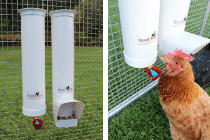
- Keeping feed and water off the ground and away from droppings (find drinker and feeder sets here)
- Removing droppings and wet bedding regularly, since damp conditions favour worm eggs and larvae surviving in the soil
- Discouraging wild birds from sharing your run and feeders, as they can carry and spread parasites
- Keeping stocking density reasonable so the yard isn’t overloaded with droppings
When to Call the Vet
If you’re seeing weight loss, poor egg production, or general ill health despite a regular worming routine, it’s worth getting a vet involved rather than guessing. A faecal test can confirm exactly what you’re dealing with, and an avian vet can advise on trickier parasites (like protozoal infections such as coccidia, which aren’t touched by standard wormers) and on safe, legal treatment options — since a surprising number of otherwise effective drugs are either unregistered or outright banned for use in poultry in Australia.

Add comment