

Do Chicken Coops Attract Mice & Rats? How to Keep Them Out for Good
(Updated 23 July 2026)
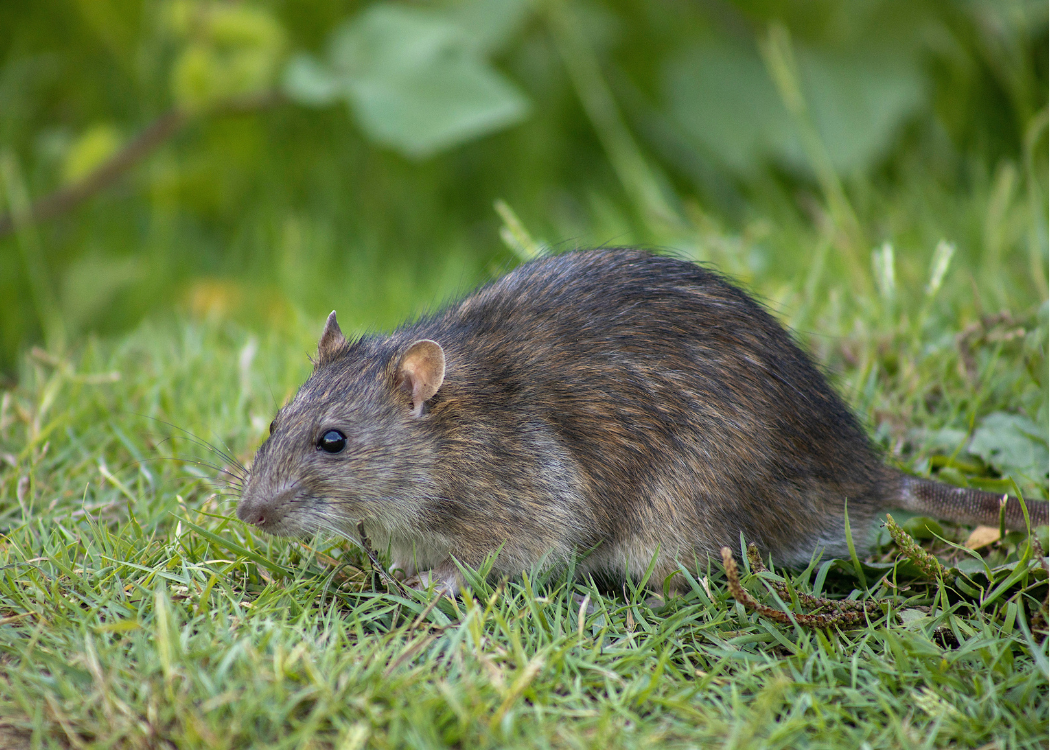
I love backyard chickens but I’m definitely not a fan of mice and rats. Just because you keep chickens in your backyard doesn’t mean you also have to put up with mice or rats in your chicken coop. Obviously it’s not the chickens themselves that attract mice or rats — it’s the spilt or poorly stored grain or pellets that bring these unwanted visitors to your coop in the first place.
Rodents are looking for three things: food, water and shelter. If your chicken coop provides a secluded corner your chickens can’t access, plus a reliable food and water source, these little creatures might just decide to move in permanently. Interestingly, chickens are actually omnivores, which means they eat both vegetable and meat materials. Chickens happily eat insects, worms, carcasses, as well as seeds, grains, weeds and other plant material. That means a mouse that’s a bit slow running through the coop might find he becomes a light snack for one of your hens. I wouldn’t, however, rely on your chickens to keep your rodent problem under control on their own.
Owners of backyard chickens should always take preventative measures against rats and mice, since these pests can bring a whole range of diseases along with them.
Signs You’ve Already Got a Rodent Problem
Before we get into prevention, it helps to know what you’re looking for. A few telltale signs mice or rats have moved into your coop:
- Small, dark droppings around the feeder or in corners
- Gnaw marks on wooden frames, feed containers or nesting boxes
- Greasy smudge marks along walls and skirting, left behind as rodents repeatedly brush past the same routes
- Small burrows or holes near the base of the coop
- Rustling or scratching noises after dark
If you’re spotting any of these, it’s worth acting sooner rather than later — rodent populations can grow quickly once they’ve found a reliable food source.
 Keeping Mice Out of Your Chicken Coop
The first, logical step is to try to stop mice actually entering your chicken coop — but that’s much easier said than done. Mice can squeeze through impossibly small gaps, so small we often overlook them entirely, assuming they’re too tight for anything to fit through.
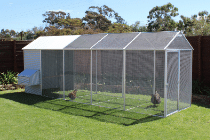
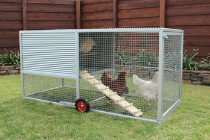
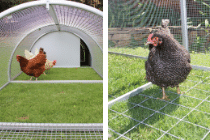
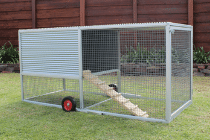
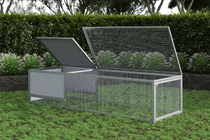
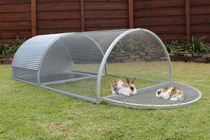
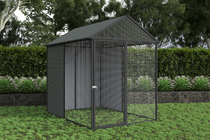
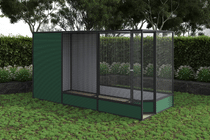
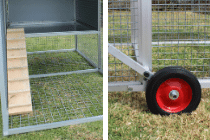
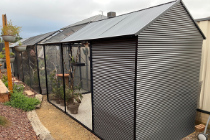
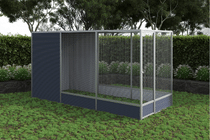
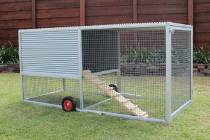
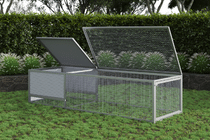
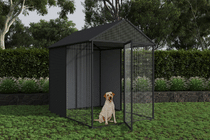
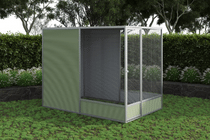
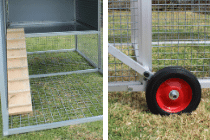
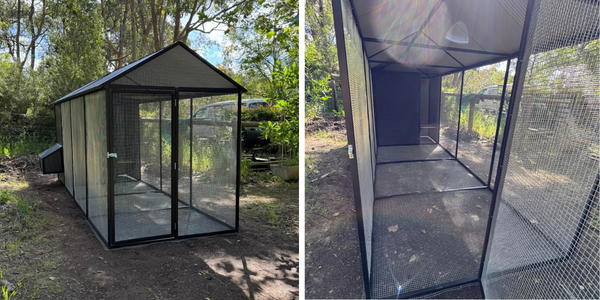
If you’ve got a fixed chicken coop built with solid iron walls, a concrete floor and fine mesh, you’ve got a decent shot at keeping rodents out. Mobile chicken coops are trickier, since they’re generally lighter and often sit on a floor made of standard or large wire mesh which have gaps wide enough for a determined mouse (or even a rat) to squeeze through, or for burrowing rodents to dig their way up underneath.
A few practical ways to close off the usual entry points:
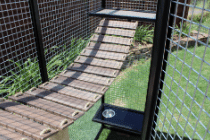
- Look for a coop with a galvanised mini mesh floor and walls. This is something we’re often asked about, so we now build our galvanised mini mesh flooring into our mobile coop range as well as our walk-in Chicken Palace coops. The tight squares of 12.5mm x 12.5mm mesh makes it far harder for rodents to squeeze through or dig up from below, and being galvanised means it holds up well outdoors without rusting through over time.
- Check for gaps regularly. If you’ve got a timber coop, these shift and warp over time, and a gap that didn’t exist last season might be there now. A quick walk-around every few months is worth the ten minutes it takes.
Starting with a coop that’s actually built with rodent-resistant mesh takes a lot of the guesswork out of it, but there’s still plenty you can do beyond the coop itself to keep mice and rats away.
 Mice Love Spilt Feed
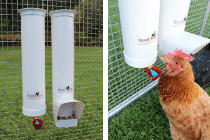
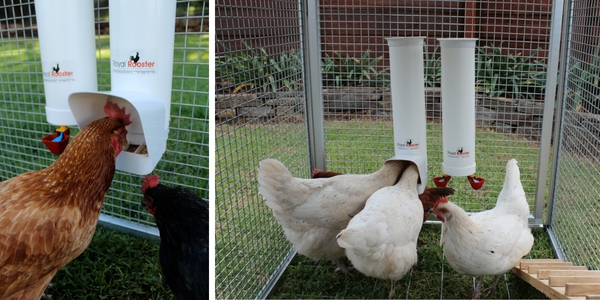
One of the biggest factors in keeping rodents away is making sure you have an adequate feeder that doesn’t let your chickens spill a great deal of feed onto the ground. We regularly had customers asking us for suggestions on how to stop their chickens scratching grain all over the ground. Wasted feed can cost you a lot more than you’d think in ongoing chicken feed bills. Most chickens naturally love to scratch at their feed, which means a good portion of it ends up on the ground and goes to waste — and straight into the path of hungry rats and mice.
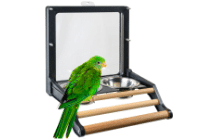
Look for a feeder with dividers or a design that stops chickens “swiping” feed out onto the ground rather than pecking at it directly — our Royal Rooster feeders were designed with exactly this problem in mind. Cutting down on spilt feed is one of the single most effective ways to keep rats and mice away from your coop, since even rodents that can physically get in have far less reason to stick around without a reliable food source waiting for them.
Should I Take Away the Self-Feeder?
If you’ve got a serious mice problem, you might be tempted to ditch the self-feeder altogether and just scatter feed on the ground once a day instead. Unfortunately, chickens do much better with a regular, continuous supply of feed they can access throughout the day, and self-feeders are really the easiest way to guarantee that. Rather than removing the self-feeder entirely, it’s much smarter to invest in a feeder that’s specifically designed to limit how much grain gets spilt in the first place.
How Should I Store My Chicken Feed?
You also need to make sure your grain or pellets are stored properly in a sealed, rodent-proof container. Rats and mice can be remarkably determined once they’ve sniffed out food they’re interested in. I once discovered a lost Tupperware container in our garage, tucked behind a cupboard, that had been completely chewed through by mice trying to get at the grain inside. Tough plastic — even wood — is no real obstacle for a hungry mouse or rat. Do yourself a favour and invest in a strong, ideally metal, storage container, such as an old-fashioned garbage bin or a 44 gallon drum, to keep your grain safely out of reach.
Trapping Rats and Mice Safely Around Chickens
If prevention alone isn’t cutting it and you’ve decided to trap, the priority has to be keeping your flock safe in the process. A few things worth knowing:
- Avoid rodenticide (poison bait) in or near the coop. This is the big one. Chickens can peck at bait directly, or eat a poisoned rodent that’s died nearby, and end up secondarily poisoned themselves. Poison baits are also a risk to wild birds, pets and children who may come across them.
- Use snap traps in a covered bait station. A simple enclosed box or tunnel with small entry holes lets rodents in but keeps curious beaks and feet out, so your chickens can’t accidentally trigger a trap meant for something much smaller than them.
- Position traps away from where chickens roam. Along fence lines, behind nesting boxes, or in the secluded corners rodents already favour, rather than out in the open run.
- Check traps daily. Both for effectiveness and so you’re not leaving anything unpleasant for your flock to discover.
If you’re dealing with a persistent or large infestation, it’s worth calling in a pest control professional who can advise on options that are safe to use around livestock.
Other Ways to Discourage Rodents
A few extra habits that help keep numbers down over time:
- Keep a tidy coop and run. Regular clean-outs, removing uneaten scraps.
- Encourage natural predators. A cat that has access to the run, or simply not discouraging owls and other birds of prey from hanging around your property, can help keep rodent numbers in check.
- Try natural deterrents. Some backyard chicken keepers swear by peppermint oil around entry points, since rodents tend to avoid the strong scent — it’s not a complete solution on its own, but it can help as part of a broader approach.
- Keep compost and scrap piles well away from the coop. These are another magnet for rodents and are easy to overlook when you’re focused on the coop itself.
None of these steps will guarantee a rodent-free coop on their own, but combined — good feed management, sealing off entry points, safe trapping when needed, and a bit of ongoing vigilance — they’ll make your backyard a lot less appealing to mice and rats, and a lot safer for your flock.