





Fox Proof Your Chicken Coop: The Complete Australian Guide
(Updated 15 Sept, 2026)
If a fox has ever attacked your chickens, you already know how devastating it is to find your coop ransacked overnight. A fox proof chicken coop isn’t a luxury — it’s essential, whether you live on a rural property or in the middle of a major city. Many backyard chicken owners assume foxes are a rural problem only. That assumption can cost you your entire flock.
This guide covers exactly how to fox proof a chicken coop, from mesh floor specifications to fence-burying depth, so you can protect your chickens, rabbits, guinea pigs, and other small animals before a fox ever finds your yard.
Why Fox Proofing Your Chicken Coop Can’t Wait
Foxes are active year-round, but August marks their peak breeding season. During this period, parent foxes hunt aggressively to feed their litters, and by spring, mother foxes are actively teaching kits to hunt. Backyard chickens make an easy, high-value target during both phases.
The safest approach is to fox proof your coop before you spot a fox in the area — not after.
Why Foxes Keep Coming Back — Even When They Don’t Eat Every Bird
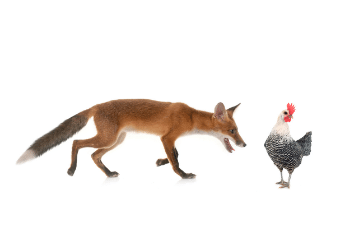 One of the most distressing things about a fox attack is that it often isn’t about hunger at all. Foxes are known for surplus killing — instinctively killing every bird they can reach in a coop, even if they only eat one or two. It’s common to find several chickens killed, sometimes with just the head bitten off, and the rest left untouched.
This is normal predator behaviour, not a sign that “the fox will only take what it needs.” A fox that gets into your coop once will almost always come back, often within days, because it now knows exactly where an easy meal is. This is exactly why fox proofing needs to be permanent and thorough, not a one-off reaction after a single attack.
Foxes Are Increasing in Australian Metro Areas
Fox sightings have risen sharply in several Australian metro areas, particularly Melbourne and Perth. As urban development eats into bushland, foxes are pushed closer to suburban backyards in search of food and shelter.
As chicken coop manufacturers, we regularly hear from customers about bold fox encounters — foxes spotted on back porches at dawn, and even foxes brazen enough to eat food left out for pet cats and dogs. If foxes are active in your suburb, your chickens are already at risk.
For further reading on fox behaviour and control:
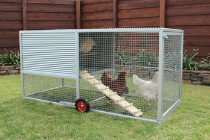
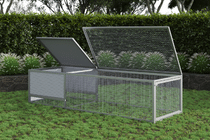
How to Fox Proof a Mobile Chicken Coop
1. Add a Fox-Proof Mesh Floor
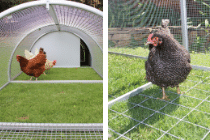
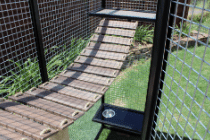
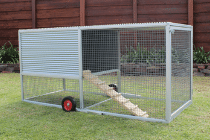
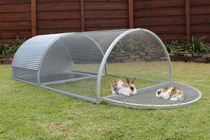
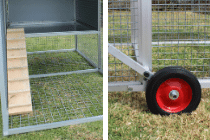
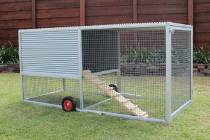
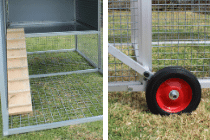
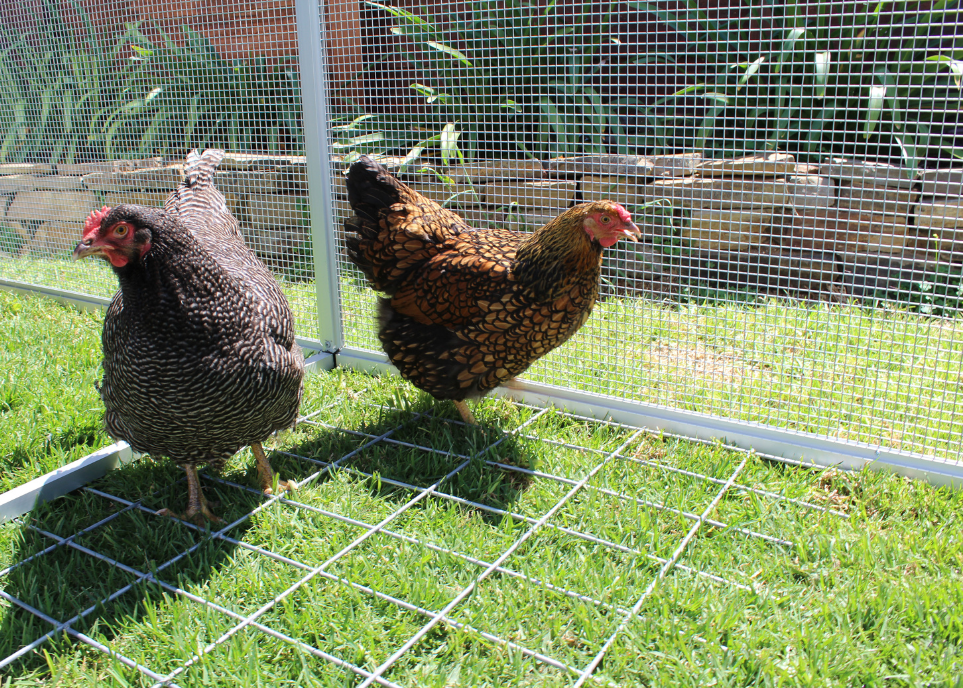
 The most effective way to stop foxes from digging into a mobile coop is to wire a mesh floor directly to its base. This lets the floor move with the coop as you rotate your chickens around fresh ground.
Mesh specifications matter:
- 150mm x 100mm x 5mm – Standard fox protection — large enough for chickens to scratch, small enough to block foxes (foxes burrow at an angle, so they can’t get underneath even though the gaps look large)
- 50mm x 50mm x 3mm – Increased fox protection
- 12.5mm x 12.5mm x 1.24mm – Fox protection plus rodent and snake exclusion
2. Consider a Mesh Skirt Instead
An alternative to a full mesh floor is a mesh “skirt” around the coop’s perimeter. This gives chickens more scratching room since there’s no mesh underfoot, but it makes the coop harder to move. In our experience, a full mesh floor is easier to manage day-to-day, though a skirt may suit some setups better.
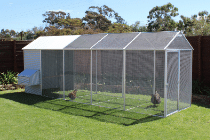
How to Fox Proof a Fixed Chicken House and Run
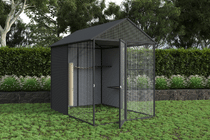
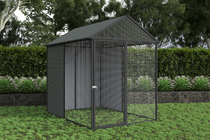
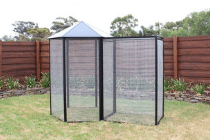
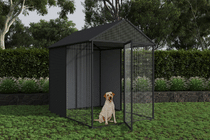
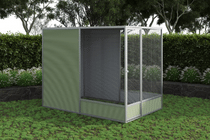
 If your chicken house stays in one spot, fox proofing focuses on the run:
-
Build a high perimeter fence. Use chicken wire with holes no larger than 80mm in diameter, at least 1.8m high, to stop both foxes climbing in and chickens flying out.
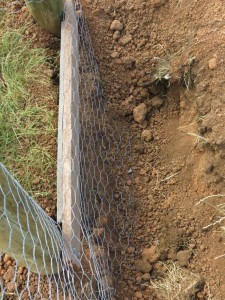
- Bury the wire. Dig the base of the fence 50–60cm into the ground. Foxes will hit the buried wire when they try to burrow underneath and eventually give up.
- Weigh down the base. As an alternative to burying wire, place something heavy — timber or concrete sleepers — along the base of the fence.
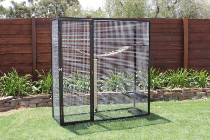
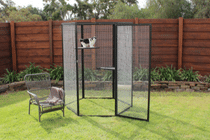
- Add a full mesh floor. For walk-in coops, a mesh floor under the entire run is the simplest way to block foxes completely. Cover it with river sand or bark chips so chickens can still scratch naturally.
If you’re considering a new coop or an upgrade, our mesh floor add-ons at Royal Rooster are designed to help you fox-proof your setup quickly and effectively.
Additional Fox Deterrents for Nighttime Protection
Physical barriers like mesh floors and buried wire are your first line of defense, but a few extra deterrents can make your coop a less appealing target in the first place — especially overnight, when foxes are most active.
Play a Radio Near the Coop at Night
Leaving a radio on talkback or voice-based content near the coop overnight can help deter foxes. Foxes are naturally wary of humans, and the sound of ongoing human voices can make them think people are nearby and active, making them less likely to approach. This isn’t a substitute for a secure coop, but it’s a simple, low-cost layer of deterrence worth adding, particularly if you’ve had a recent fox sighting in your area.
Install Motion-Sensor Lights
Motion-activated sensor lights are one of the most effective low-cost fox deterrents. Foxes are cautious animals, and a sudden burst of bright light when they approach can startle them and interrupt their approach before they get close to the coop. Position sensor lights so they cover the main approach paths to your coop and run, not just the coop itself, since foxes often scope out an area before attempting entry. For best results, pair sensor lights with your mesh floor and buried wire — lights deter, but physical barriers stop.
Use an Automatic Chicken Coop Door
Most fox attacks happen because a coop door was left open, forgotten, or opened too early in the morning while it’s still dark. An automatic chicken coop door removes that risk entirely by closing your chickens in at dusk and opening the coop again after sunrise, on a timer or light sensor. This is one of the simplest upgrades you can make, particularly if:
- You work long or irregular hours and can’t always be home at dusk
- You travel and rely on someone else to lock up your chickens
- You’ve ever forgotten to close the coop, even once
An automatic door doesn’t replace a fox-proof mesh floor and secure fencing, but it closes one of the most common gaps in coop security — human error.
Do You Need a Livestock Guardian Dog?
You may have heard the suggestion to “get a Maremma.” Livestock guardian dogs (LGDs) can be highly effective fox deterrents, but they come with trade-offs:
- They typically take a couple of years to become fully reliable
- They bark frequently — which may not suit suburban neighbours
- They need space and time that not every backyard chicken keeper has
LGDs work well on larger rural properties, but a well-built fox proof coop is a more practical solution for most suburban and urban chicken owners.
Baiting, Trapping and Shooting Foxes in Australia
If foxes are a persistent problem, some chicken owners look beyond deterrents and exclusion fencing toward directly controlling fox numbers. This is heavily regulated in Australia, and the rules differ by state and territory, so always check with your local council or state agriculture department before taking action.
A few key points:
- Landholders are generally responsible for fox control on their own property. In states like Victoria and South Australia, foxes are declared pest animals, and landowners have a legal obligation to manage them humanely.
- Poison baiting is tightly restricted. The two poisons approved for fox control, 1080 and PAPP, are restricted (Schedule 7) chemicals that can generally only be obtained, handled, and used by authorised or licensed persons under state permits — not something you can buy and use freely in a suburban backyard.
- Trapping rules vary significantly by council. Some urban councils prohibit setting fox traps without a permit due to the risk to pets and native wildlife, while other regional and rural areas allow cage or soft-jaw trapping under strict animal welfare conditions (e.g., traps must be checked daily). Some councils and shires run their own coordinated fox control or trapping programs you may be able to join.
- Shooting is regulated by both firearms and animal welfare law. It must only be carried out by a licensed, experienced shooter, and is generally not permitted in built-up residential areas for safety reasons.
- If you trap a fox, don’t assume you can deal with it yourself. Some local councils will collect and humanely dispose of a trapped fox on request, so it’s worth calling them before you do anything else. Others will direct you to a licensed pest controller.
Because the legal requirements are strict and vary so much by location, your best first step is always to contact your local council or state department of agriculture/primary industries to find out what’s permitted in your area and whether any local fox control programs are already running near you.
Common Fox Myths — Debunked
There’s a lot of backyard folklore about keeping foxes away. Some of it holds up; a lot of it doesn’t.
Myth: Urinating around the coop will keep foxes away. This is a persistent piece of advice, but there’s no reliable evidence that human urine deters foxes. Some predator-based commercial deterrent products use fox or dog urine/scent specifically because it signals rival predator territory — but that’s a different mechanism, and even those products need frequent reapplication and work best alongside physical barriers, not instead of them.
Myth: Foxes only live in the bush, so suburban chickens are safe. As covered above, fox numbers are rising in metro areas like Melbourne and Perth precisely because urban development has pushed them out of bushland and into suburbs, where food is easier to find.
Myth: A fox will only take one chicken, so the rest are safe. As explained above, foxes are surplus killers. Losing several birds in a single attack is common, not unusual.
Myth: Standard chicken wire is enough to keep foxes out. Regular chicken wire can be chewed through, torn away from a weak frame, or dug under if it isn’t buried or backed with heavier-gauge mesh. It helps keep chickens in, but on its own it’s not reliable at keeping foxes out.
Myth: Foxes won’t come back once they’ve been scared off once. A fox that has successfully accessed a coop, or even come close, will typically return to check on it again. Ongoing deterrents (lights, sound, secure locking) matter more than a single scare event.
Frequently Asked Questions
What size mesh keeps foxes out of a chicken coop? A mesh floor with 10cm x 15cm openings is generally sufficient when wired flat to the base of the coop, since foxes can’t dig at the right angle to get through. For extra protection, 50mm x 50mm mesh or smaller is recommended.
https://www.royalrooster.com.au/wp-content/uploads/2024/03/Fox-proof-chicken-fence-225×300-1.jpeg
How deep do you need to bury wire to stop a fox digging? Bury chicken wire 50–60cm into the ground along the base of your run fencing to stop foxes tunnelling underneath.
Can foxes chew through chicken wire? Yes — thin aviary-style mesh under 1mm thick can be chewed through or torn from the frame. Use mesh at least 1.24mm thick for reliable fox protection.
Are foxes really a problem in Australian cities? Yes. Fox numbers have increased in metro areas including Melbourne and Perth as urban development reduces natural bushland habitat.
Will a fox come back after killing some of my chickens? Yes. Foxes often return to a coop they’ve successfully accessed, and a single attack can result in multiple birds lost even if the fox only eats one. Permanent physical barriers, not one-off deterrents, are the most reliable long-term protection.
Can I trap or bait a fox myself in Australia? Rules vary by state and council. Poison baits like 1080 and PAPP are restricted chemicals generally requiring authorisation, and many urban councils require a permit for trapping. Contact your local council or state agriculture department before attempting any fox control, as some councils will collect and dispose of a trapped fox for you.
Does urinating around the coop keep foxes away? There’s no solid evidence that human urine deters foxes. It’s one of the more common backyard myths — a secure mesh floor and buried fencing are far more reliable.
Protect Your Flock Today
Fox proofing your coop is far easier — and cheaper — than recovering from a fox attack. Whether you’re setting up your first coop or upgrading an existing one, taking these steps now protects your chickens, rabbits, and other backyard animals year-round.
Explore Royal Rooster’s mesh floor add-ons to fox-proof your coop quickly and effectively.