


Why It’s Crucial to Ventilate Your Chicken Coop (and Prevent Respiratory Illness)
(Updated 14 July 2026)
Most backyard chicken keepers understand that a coop needs good airflow in the height of an Australian summer. Fewer realise that ventilation matters just as much in winter, even in the parts of the country that get down to freezing overnight — the Southern Highlands, the Adelaide Hills, the Tasmanian Midlands, or the Blue Mountains.
Chickens produce a surprising amount of moisture. Some comes from water vapour in their breath, but most comes from their droppings — chicken manure is around 75–80% moisture. In an enclosed coop, that moisture has nowhere to go unless there’s airflow to carry it out. Damp, stagnant air holds onto ammonia, bacteria and viruses, and that’s what leads to respiratory disease in a flock. Get the ventilation right and you remove most of these risks in one move, whatever the season.
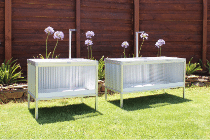
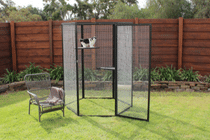
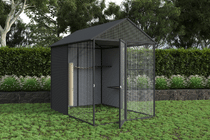
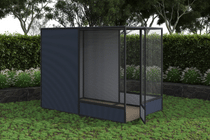
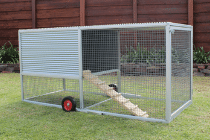
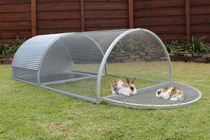
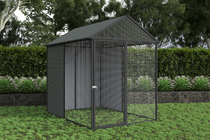
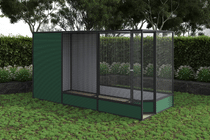
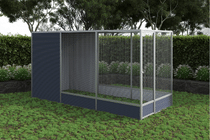
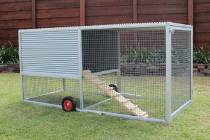
The good news is this doesn’t need to be complicated. Royal Rooster’s coops are built around two proven approaches to this, depending on the design: cross-ventilation on the mobile coops, and a fully removable side on the walk-in fixed coops (our Chicken Palace range) — both achieve the same result of letting air move freely through the coop, with a weather shield available to dial things back in cold or wet weather.
Ventilation in Summer: Australia’s Biggest Coop Risk
Heat stress is the number one welfare risk for backyard chickens in Australia, and it’s one the RSPCA specifically calls out — shade, ventilation and constant access to cool water are considered essential during hot weather, not optional extras.
Chickens don’t sweat. They lose heat by panting, by spreading their wings to expose bare skin, and by increasing blood flow to their comb, wattles and feet — a mechanism that becomes far less effective once the air temperature climbs. As a rough guide:
- Chickens are most comfortable between roughly 18–24°C
- Signs of heat stress typically start to appear from around 27–32°C
- Above 35–38°C, especially with overnight temperatures that don’t drop, heat stress can become life-threatening — and heavier, more heavily feathered breeds struggle first
If your coop is hotter inside than the air outside, ventilation has failed. A well-ventilated coop should never trap heat; it should let it escape as fast as it builds up.
What good summer ventilation looks like:
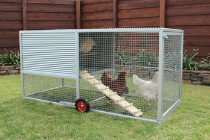
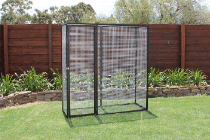
- Built-in cross-ventilation on opposite sides, on coops designed this way (like Royal Rooster’s mobile coops), so air can move freely all the way through rather than sitting stagnant in one spot
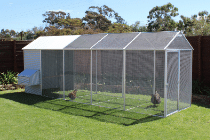
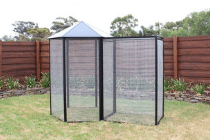
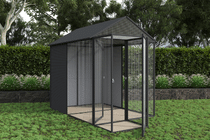
- A full side left completely open, on walk-in fixed coops (like our Chicken Palace range) — the fourth side of the housing area is designed to stay fully open in hot weather, giving maximum airflow through the whole space
- As much of the coop opened up as possible in hot weather, whichever design you have — Australian summers generally call for more ventilation than keepers expect, not less
- Adjustable weather shields rather than fixed walls, so the same opening that gives you full airflow in summer can be dialed back when the weather turns — this is exactly what Royal Rooster’s Weather Shields are designed for
- Shade over the coop and run, especially blocking the harsh afternoon western sun — this reduces how much ventilation you need in the first place
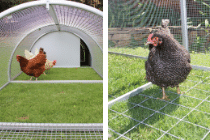
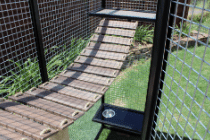
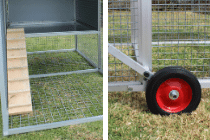
- A mesh or raised floor where practical, which improves airflow from underneath as well as helping with drainage and predator-proofing
Watch your flock on a hot afternoon. Panting with an open beak, holding wings away from the body, or birds lying listless on the ground are all signs the current airflow isn’t coping. For a full rundown of hot-weather care, including water, shade cloth and feeding timing, see our guide on keeping chickens cool in summer.
Ventilation in Winter: Still Non-Negotiable
Even in Australia’s milder climate, winter ventilation matters — particularly in the colder regions of Victoria, Tasmania, the ACT, and the alpine and tablelands areas of NSW, where overnight frosts are common.
The biggest winter risks are respiratory illness and frostbite on a chicken’s comb or wattles, and both are usually caused by trapped moisture rather than cold air itself. Chickens actually cope well with cold as long as the air inside the coop stays dry — they carry a heavy feather coat that traps a layer of warm air against their skin. It’s the combination of moisture and cold that causes damage, because damp air conducts heat away from exposed skin far more efficiently than dry air.
This is also why insulating a coop can backfire. Sealing up a coop to keep it warm traps moisture inside with nowhere to escape, which raises humidity and can make frostbite risk worse, not better. Unless you’re in a genuinely severe cold climate, insulation usually isn’t necessary — ventilation that removes moisture is the priority.
A good winter setup:
- Keeps direct wind and driving rain off the birds, particularly around roosting height
- Still allows some airflow through the coop to vent moisture and ammonia, even on cold days
- Uses a deep layer of straw or wood shavings on the floor to help retain warmth at bird level
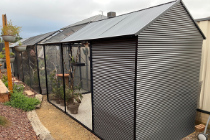
- Uses a removable weather shield to partially close things off in cold snaps — on mobile coops this sits over the remaining open sides alongside the built-in cross-ventilation at the base; on walk-in fixed coops it covers the fourth side that’s left open in summer — without ever sealing the coop up completely, so it can be fully opened again once the weather warms up
Royal Rooster’s Weather Shields are designed for exactly this — they block wind and rain while chickens can still come and go and air can still move through, then come off entirely for full summer airflow.
Ammonia: The Fume You Can Smell (and the One You Can’t)
Unless you’re removing droppings constantly, ammonia will build up in any coop. At low concentrations it’s barely noticeable; at higher concentrations it damages the delicate tissue lining a chicken’s respiratory tract, well before the smell becomes unbearable to a human nose.
Industry welfare standards for commercial poultry cap ammonia at 15 parts per million — a useful benchmark for backyard keepers too. A simple rule of thumb: if you can smell ammonia when you open the coop door in the morning, ventilation needs improving. Fresh droppings will always have some smell; a sharp, eye-watering ammonia smell that lingers through the day is the sign to act on.
Regularly cleaning out bedding helps, but ventilation does the heavy lifting. A mobile chicken coop that can be moved to fresh ground is also a genuine advantage here, since droppings never get the chance to build up in one spot the way they do in a fixed coop.
Signs of Respiratory Illness in Chickens (and What to Do)
Poor ventilation is one of the most common underlying causes of respiratory illness in backyard flocks, because ammonia and constant moisture both damage the lining of a chicken’s airways and make it far easier for bacteria and viruses to take hold. Knowing what to look for means you can step in early, before it spreads through the whole flock.
Signs to watch for:
- Sneezing or coughing
- Nasal or eye discharge, or eyes that look swollen, watery or partly closed
- A rattling, clicking or gurgling sound when breathing
- Breathing with an open beak, or a noticeable tail-bob with each breath, even when it isn’t hot
- Swelling around the face, sinuses or wattles
- Reduced appetite, quietness, or a hen sitting fluffed up and separate from the rest of the flock
- A sudden drop in egg-laying
A single bird sneezing occasionally isn’t necessarily cause for alarm, but several of these signs together, symptoms spreading to other birds, or laboured breathing at rest are all signs to act on straight away.
What to do:
- Separate the affected bird from the rest of the flock where possible, to slow any spread and let you keep a closer eye on it.
- Fix the ventilation and bedding immediately — open the coop up fully, clean out damp or ammonia-smelling bedding, and check the coop isn’t overcrowded for the number of birds.
- Keep water and food easily accessible close to the affected bird, since sick chickens often eat and drink less.
- Contact an avian or poultry-experienced vet, particularly if more than one bird is affected, symptoms are severe, or breathing looks laboured — respiratory symptoms in chickens can range from a mild environmental irritation right through to infectious conditions like infectious bronchitis or Mycoplasma (chronic respiratory disease), which need proper diagnosis and, in some cases, treatment across the whole flock.
- Know when to report it. Rapid onset of illness or sudden deaths across multiple birds should also be reported to your state or territory agriculture department, or Australia’s Emergency Animal Disease Watch Hotline on 1800 675 888 — some serious poultry diseases are notifiable in Australia by law, and early reporting protects both your flock and others nearby.
Most cases of respiratory irritation in backyard flocks come down to environment rather than an infectious outbreak — and in those cases, correcting the ventilation, cleaning up ammonia build-up, and giving birds space to recover is usually enough to see them right within a few days.
Draft vs Ventilation — They’re Not the Same Thing
This is the most common mix-up in coop design. A draft is a direct, concentrated current of moving air hitting the birds at roosting height, chilling them by stripping away the warm air layer trapped in their feathers. Ventilation is a gentler, broader movement of air through the coop that removes stale, moist air without blasting the birds directly.
The goal in any season is airflow without direct wind on the roosting birds. A well-designed coop achieves this with cross-ventilation and adjustable shielding rather than gaps or vents positioned right at perch height — which is why a coop can be simultaneously well protected from wind and well ventilated. Those two things aren’t in conflict; it comes down to where the openings are and how easily they can be adjusted for the conditions.
Regional Considerations Across Australia
Ventilation needs aren’t identical from coast to coast:
- Tropical and sub-tropical coasts (Far North Queensland, the NSW North Coast, the Top End): Persistent humidity is the main issue year-round, not just heat. Coops need generous, permanent cross-ventilation and shouldn’t rely on sealing up much at all, even overnight.
- Hot, dry inland areas (western NSW, inland Queensland, much of WA and SA): Extreme heat with lower humidity, plus occasional dust and storms. Shade and airflow are critical in summer; ventilation needs generally drop off in the mild, dry winters.
- Temperate southern regions (Melbourne, Adelaide, Sydney, Perth): The widest swing between seasons — full summer ventilation needed, then wind protection with a weather shield through winter.
- Alpine and highland areas (Tasmania, the Snowy Mountains, the Adelaide Hills, the Blue Mountains):Genuine winter frosts, so drier bedding and drift-free but still ventilated housing matters most from autumn through spring.
Whatever your climate, the RSPCA’s space guidelines are also worth checking alongside ventilation — a cramped coop makes any ventilation problem worse, since more birds in a smaller space means more moisture and heat concentrated in the same airflow. Our chicken coop size guide covers the current RSPCA-aligned recommendations.
What Type of Ventilation Should You Look For?
You don’t need fans, powered ventilation, or roof vents for a backyard coop to breathe well. There’s more than one way to get airflow moving through a coop properly, and Royal Rooster’s two coop ranges are built around different ones:
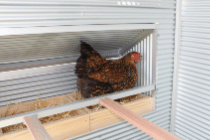
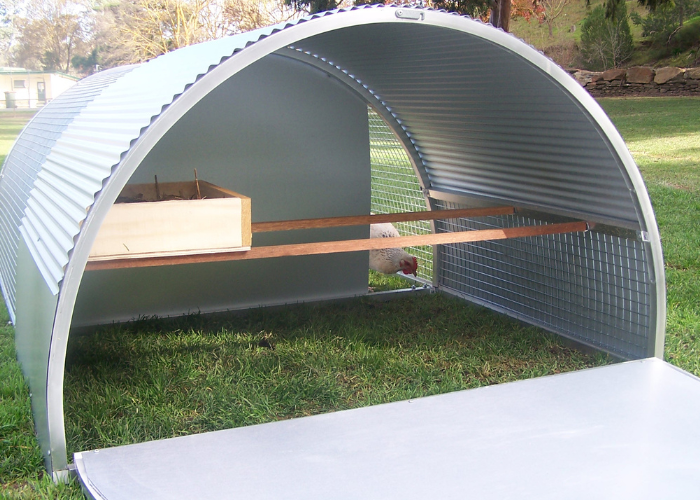
- Mobile coops use built-in cross-ventilation at the base of the coop, on opposite sides, so air moves through the space continuously without needing to be opened up manually.
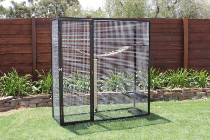
- Walk-in fixed coops (our Chicken Palace range) are designed with the fourth side of the housing area left completely open in hot weather, giving the whole space maximum airflow.
Both ranges pair with a removable weather shield for the colder months — on the mobile coops it covers the remaining open sides alongside the base ventilation, and on the Chicken Palace range it covers that open fourth side — so you get full airflow as standard, with the option to dial protection up or down as the seasons change, rather than a fixed design that’s either fully open or fully sealed.
Many coops on the market simply don’t have enough ventilation, or rely on vents that can’t be adjusted. Whatever coop you’re using, check that air can genuinely move through it, that shielding can be added or removed as conditions change, and that you’re not relying on insulation alone — an “insulated” coop isn’t automatically a well-ventilated one. They solve two different problems, and a coop can tick the insulation box while still trapping moisture and heat if air can’t move through it.
Quick Ventilation Checklist
- Air can move all the way through the coop — via built-in cross-ventilation (mobile coops) or a fully openable side (walk-in fixed coops)
- As much of the coop opened up as possible in summer
- A weather shield to add wind and rain protection over the open areas in winter, without sealing the coop up completely
- Shade over the coop and run, especially from the west
- No lingering ammonia smell when you open the coop each morning
- Adequate space per bird — overcrowding undermines even good ventilation
Final Word
Good ventilation isn’t a summer-only job or a winter-only job — it’s a year-round design feature that protects your flock from heat stress, frostbite, ammonia damage and respiratory disease all at once. Royal Rooster coops are built with this in mind, with ventilation designed for Australian conditions and weather shields available to adapt the same coop across the seasons.
Browse our full range of well-ventilated chicken coops, built and tested for Australian backyards.